Vestibular Rehabilitation · Atlanta, GA

Vestibular rehabilitation therapy in Atlanta that retrains your balance system.

Vestibular rehabilitation therapy at Vertigo Atlanta & Physical Therapy is one-on-one, exercise-based physical therapy led by Dr. Jose Crespo DPT that trains the brain to compensate for the inner-ear, visual, and neck signals driving your dizziness. Every plan starts with infrared Video Frenzel assessment, so the exercises are matched to the mechanism behind your symptoms, not to a generic dizziness protocol.

Care model
1:1 with Dr. Crespo, DPT
Specialty
Vestibular rehabilitation
First step
Infrared Video Frenzel assessment
Session
50–60 min, one-on-one
Vestibular Rehabilitation Therapy One-on-one, mechanism-specific vestibular rehab for vertigo, dizziness, imbalance, and motion sensitivity in Atlanta.
Visit 3128 Clairmont Rd
Atlanta, GA 30329
What it is

Vestibular rehabilitation therapy treats the cause of dizziness, not just the symptom.

Vestibular rehabilitation therapy (VRT) is a specialized form of physical therapy that reduces dizziness, vertigo, and unsteadiness by retraining how the brain processes balance. Through targeted eye, head, posture, and movement exercises, it helps the nervous system adapt to, compensate for, and habituate the faulty signals that keep you off balance. It is an active, exercise-based treatment, not a medication and not a passive procedure.

Your balance depends on three input streams working together: the inner ear (the vestibular system), vision, and the position sense from your neck and body. When one stream sends faulty or mismatched information, the brain can be retrained to recalibrate around it. That retraining is exactly what vestibular therapy delivers. Since the most effective exercises depend on which input stream is failing, Dr. Crespo begins every case by recording what your eyes do under infrared lenses, then builds your program around those findings.

See the full diagnostic process →

How it works

Three ways the brain relearns balance.

Vestibular therapy works through three mechanisms of recovery. Most plans use more than one, sequenced to what the assessment finds and adjusted as you progress.

01

Adaptation

Gaze-stabilization exercises ask you to keep your eyes fixed on a target while your head moves, producing a controlled “retinal slip” that trains the vestibulo-ocular reflex (VOR) to respond accurately again. This is the core method for reducing blurred or bouncing vision and dizziness with head movement.

  • VOR x1 and VOR x2 gaze-stabilization drills
  • Graded by speed, distance, and background complexity
  • Targets vestibular hypofunction and VOR gain loss
02

Habituation

Controlled, repeated exposure to the specific movements or visual environments that provoke your symptoms teaches the brain to stop over-reacting to them. Over time, the same trigger produces less dizziness.

  • Movement and position changes matched to your triggers
  • Visual-motion and busy-environment desensitization
  • Targets motion sensitivity and visually induced dizziness
03

Substitution

When vestibular input is permanently reduced, the brain can lean on other strategies to hold gaze and balance steady, such as pre-programmed eye movements and stronger use of vision and body position sense.

  • Saccadic and smooth-pursuit retraining
  • Postural and somatosensory balance strategies
  • Targets stable, lasting compensation after loss
What to expect

An answer first, then a clear care plan

01

Assess

Your first visit is a vestibular assessment. Dr. Crespo records your eye movements with infrared Video Frenzel goggles and pairs the findings with functional balance and equilibrium testing to locate the source of your dizziness.

02

Plan

The findings determine the mechanism, and the mechanism determines the exercises. You leave with a specific home program and an understanding of why each exercise is on it.

03

Progress

Vestibular rehabilitation is typically a course of care, not a single visit. Many patients notice change within the first few weeks, with continued gains over roughly six to twelve weeks as the home program is advanced. Your timeline depends on the diagnosis and on consistency with the daily exercises.

Before & after

The same patient, before and after treatment.

These are real infrared recordings from one patient at two points in care — not stock footage and not two different people. Watch the eye movements settle as the vestibular system recovers.

Acute vestibular neuritis

Grade 3 left-sided vestibular neuritis

Immediate medical + therapy management · 7-day difference

Initial eval
Robust spontaneous nystagmus Grade 3 left-sided neuritis, acute presentation
7-day recheck
Substantial reduction After immediate medical + therapy management
Untreated neuritis (chronic)

Right-sided neuritis, untreated for 6 months

Presented 6 months after onset · rechecked after 3 months of rehab

Initial eval
Robust left-beating nystagmus Head-shake test, untreated 6 months
3-month recheck
Markedly reduced response Head-shake test after 3 months of rehabilitation
What it treats

Vestibular therapy is used to treat a whole group of conditions

Vestibular rehabilitation is most effective when it is matched to the right diagnosis. These are the conditions Dr. Crespo most commonly treats with it.

Does it work

Vestibular therapy is an evidence-based treatment.

Yes. For people with dizziness and balance loss from a one-sided inner-ear (peripheral vestibular) disorder, a 2015 Cochrane review of 39 controlled studies covering more than 2,400 patients found moderate-to-strong evidence that vestibular rehabilitation is a safe and effective treatment, with benefits maintained at follow-up. Evidence also supports its use after concussion and for chronic dizziness conditions such as PPPD.

What that means in practice: vestibular therapy is not a workaround, and it is not symptom masking. It is a recognized standard of care, most effective when the exercises are matched to the correct diagnosis. That match is exactly what the infrared assessment is for.

Dr. Jose Crespo, DPT

One-on-one vestibular care, start to finish.

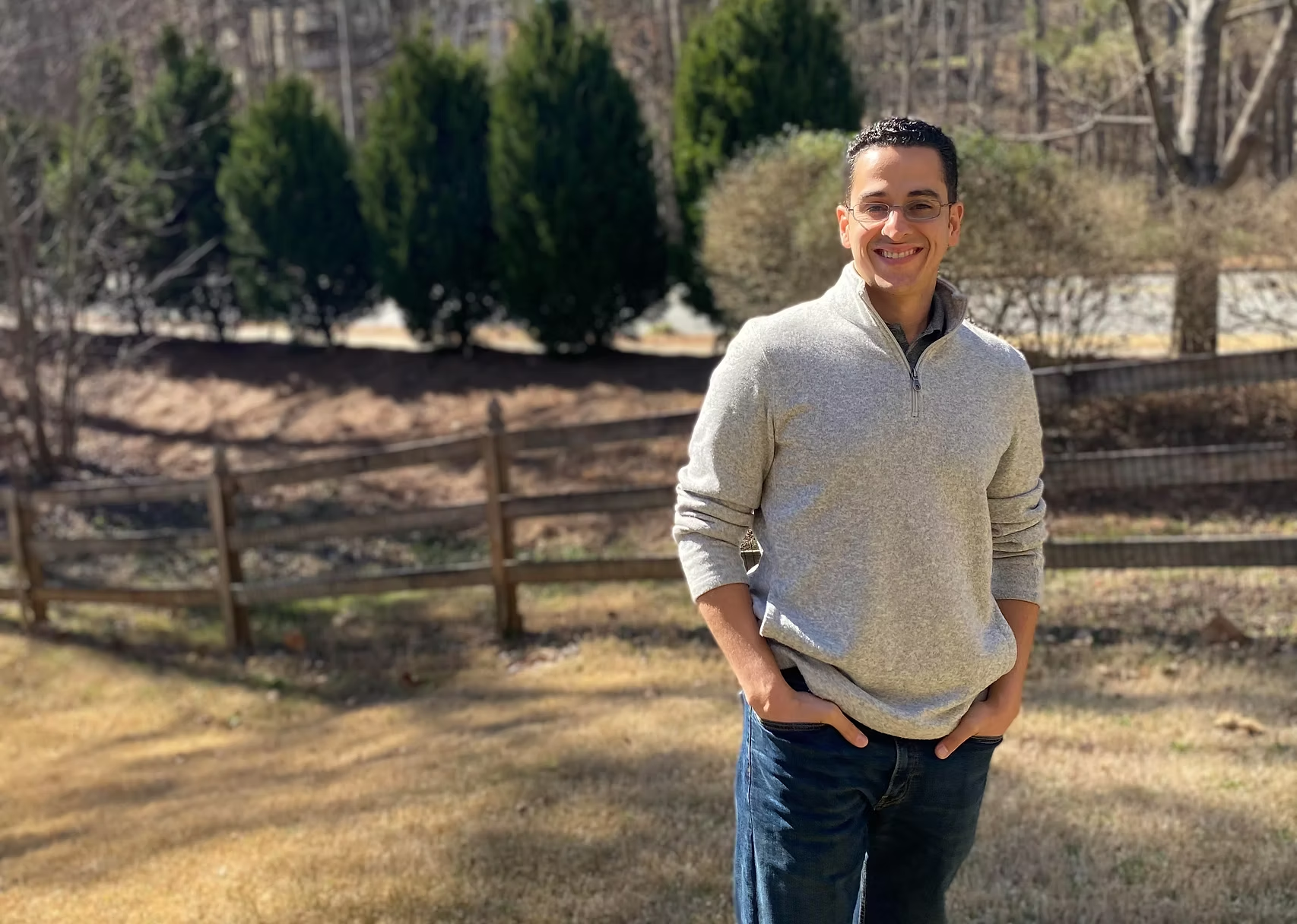
Dr. Jose Crespo is a Doctor of Physical Therapy specializing in vestibular rehabilitation in Atlanta. At Vertigo Atlanta & Physical Therapy, the clinician who assesses you is the clinician who treats you, every visit. He makes the mechanism visible with infrared Video Frenzel recording, then builds and advances the exercise program around what the findings show.

About Dr. Crespo →

The assessment is not a formality. It is the first answer the patient receives.
DPT Doctor of Physical Therapy
1:1 Direct care each visit
3 Mechanisms of recovery used
ATL Clairmont Rd location
Answers

Common questions about vestibular rehabilitation therapy.

What is vestibular rehabilitation therapy?

Vestibular rehabilitation therapy is a specialized, exercise-based physical therapy that reduces dizziness, vertigo, and imbalance by retraining how the brain processes balance signals from the inner ear, eyes, and neck. It uses eye, head, posture, and movement exercises matched to the cause of your symptoms.

What does vestibular rehabilitation involve?

It involves an assessment followed by a personalized exercise program. Typical exercises include gaze-stabilization drills that train the vestibulo-ocular reflex, habituation movements that desensitize you to symptom triggers, and balance and gait training. Most of the work happens through short daily exercises at home, with in-clinic visits to assess progress and advance the program.

How long does vestibular therapy take to work?

Many people notice improvement within the first few weeks, and most reach their main gains over roughly six to twelve weeks. The exact timeline depends on the diagnosis, how long symptoms have been present, and how consistently you do the home exercises. BPPV is often the fastest, sometimes resolving in one or two visits with repositioning.

Does vestibular therapy actually work?

Yes, for the right diagnosis it is an evidence-based treatment. A 2015 Cochrane review found moderate-to-strong evidence that vestibular rehabilitation is safe and effective for dizziness and balance loss from one-sided peripheral vestibular disorders, with benefits maintained at follow-up. Matching the exercises to the correct mechanism is what makes it effective, which is why the assessment comes first.

Who is a candidate for vestibular rehabilitation?

Vestibular therapy can help if you have BPPV, vestibular neuritis or labyrinthitis, vestibular migraine, PPPD or chronic dizziness, post-concussion dizziness, cervicogenic (neck-related) dizziness, or general imbalance and fall risk. An assessment confirms whether your dizziness is the kind that responds to rehabilitation and which approach fits.

Do I need a referral to start vestibular therapy?

Georgia allows direct access to physical therapy, but exact referral, evaluation, and insurance requirements vary. Contact the practice to confirm what applies to your situation before your first visit.

Patient reviews

What patients say after a clear diagnosis.

Real Google reviews from people who came in dizzy and left with a plan.

Book an appointment

A correct diagnosis leads to the right plan of treatment